Why Is Vitamin C So Important For Your Body?
Have you ever wondered why vitamin C gets so much attention, especially when it comes to fighting off colds and boosting immunity? With all the chatter about this vitamin during the COVID-19 pandemic, it's natural to be curious about what sets it apart.
Vitamin C, or L-ascorbic acid, is one of the essential vitamins our bodies need to keep things running smoothly. Since humans can't produce vitamin C on their own, we need to get it from our diet, mainly from citrus fruits like oranges and lemons. But if you're not getting enough from your food, dietary supplements can be another option to ensure you're meeting your daily vitamin C needs.
Benefits of Vitamin C
Vitamin C is crucial in living organisms to keep your body in good shape. It's essential for your growth, development, and repair of all your body tissues. It plays a key role in maintaining your cartilage, bones, and teeth. Plus, vitamin C supports your physical performance by contributing to energy metabolism and helping reduce fatigue. Here are some of the most common benefits:
Aids in Building a Healthy Immune System
Vitamin C is renowned for its ability to support a strong immune system. It aids in this process by helping the body produce several types of specialized immune cells that protect against infection. Additionally, it enhances the function of these immune cells and shields them from oxidative stress caused by free radicals.
Free radicals are molecules that form when your body processes food or comes into contact with tobacco smoke and radiation from sources like the sun, X-rays, or others. These molecules might contribute to heart disease, cancer, and other health issues.
Research has shown that the effects of vitamin C on the immune system may be beneficial in combating certain infections, such as pneumonia, sepsis (an extreme, life-threatening response to infection), and other respiratory infections.
Promotes Skin Healing
It's also great for your skin. Whether you take it orally or apply it directly to your skin, vitamin C can help with healing. Research shows that it might:
-Help people recover from severe burns
-Speed up wound healing
-Reduce skin inflammation in conditions like psoriasis and atopic dermatitis
-Protect your skin from sun damage
These benefits probably come from vitamin C's antioxidant powers and its ability to boost collagen production in your skin.
Collagen is a very important protein in our body, and it has a lot of the amino acids glycine, proline, and hydroxyproline. Vitamin C is really important for making collagen because it helps the amino acids link up in the right way (Gly-Hyp-Pro). Vitamin C also helps a special enzyme called prolyl 5-hydroxylase work properly. This enzyme is needed to change proline into hydroxyproline, which is a key part of collagen. In short, vitamin C helps make sure the right chemical reactions happen so that our body can repair and make new connective tissue, like collagen.
But here's a tip: getting your vitamin C from food or supplements is likely more effective than applying it to your skin. That's because collagen is found in the deeper layers of your skin, and vitamin C can't reach those layers when applied topically.
Shortens the Course of Common Cold
Various studies suggest that vitamin C supplements might:
-Shorten how long you have the common cold
-Make cold symptoms less severe
-Lower the chance of catching a cold in people in challenging situations (like soldiers or long-distance runners)
Supports Iron Absorption
Anemia occurs when the blood doesn't have enough red blood cells, which transport oxygen from the lungs to the body's tissues. Often, this is due to a lack of iron, a crucial component for making red blood cells.
Vitamin C is recognized for its ability to help your body absorb certain nutrients. As a result, healthcare providers have commonly advised taking vitamin C supplements alongside iron supplements to combat anemia.
Research from 2019 showed that vitamin C can boost iron absorption by 67%.
Maintains Healthy Uric Acid Levels
Gout is a painful type of arthritis, especially in the big toes. It happens when there is too much uric acid in the blood, which can form crystals in the joints.
Some studies have shown that vitamin C can help lower the amount of uric acid in the blood, which might help prevent gout attacks. For example, one study with 1,387 men found that those who took in the most vitamin C had much lower levels of uric acid in their blood than those who took in the least.
Protects Against Dementia
Dementia refers to a group of symptoms that affect thinking and memory. Research suggests that oxidative stress and inflammation around the brain, spine, and nerves (the central nervous system) can raise the risk of dementia.
Vitamin C is a powerful antioxidants. Having low levels of this vitamin has been connected to a reduced ability to think and remember. Additionally, several studies have found that people with dementia often have lower levels of vitamin C in their blood.
Getting Your Daily Dose of Vitamin C
Adults aged 19 to 64 need about 40mg of vitamin C a day. Luckily, you can get all you need from a healthy diet since vitamin C is found in so many foods. It's important to include vitamin C in your diet every day because your body can't store it.
Vitamin C is plentiful in many fruits and vegetables. Some great sources are:
-Citrus fruits like oranges and orange juice
-Peppers
-Strawberries
-Blackcurrants
-Broccoli
-Brussels sprouts
-Potatoes
What About Vitamin C Supplements?
Some people might need vitamin C supplements, especially those who smoke, have gastrointestinal issues or cancers, and might not get enough from their diet.
There are different forms of vitamin C supplements, each with its own advantages. However, liposomal vitamin C stands out as a superior option for several reasons.
Traditional vitamin C supplements are usually water-soluble, which can limit their absorption by the body. In contrast, liposomal vitamin C is encased in a layer of fatty acids, creating a fat-soluble form. This unique structure allows liposomal vitamin C to merge easily with the fatty layer of cell membranes, ensuring direct and efficient absorption into the cells.
The increased bioavailability of liposomal vitamin C means that the body can utilize more of the vitamin for various functions. Additionally, its fat-soluble nature allows it to remain in the body longer, providing sustained benefits with just once-a-day dosing. For these reasons, liposomal vitamin C is often considered a better option for those looking to maximize the benefits of this essential nutrient.
References:
Gao, X., Curhan, G., Forman, J. P., Ascherio, A., & Choi, H. K. (2008). Vitamin C intake and serum uric acid concentration in men. The Journal of rheumatology, 35(9), 1853–1858.
Hurrell, R., & Egli, I. (2010). Iron bioavailability and dietary reference values. The American journal of clinical nutrition, 91(5), 1461S–1467S. https://doi.org/10.3945/ajcn.2010.28674F
Hallberg, L., & Hulthén, L. (2000). Prediction of dietary iron absorption: an algorithm for calculating absorption and bioavailability of dietary iron. The American journal of clinical nutrition, 71(5), 1147–1160. https://doi.org/10.1093/ajcn/71.5.1147
Huijskens, M. J., Walczak, M., Koller, N., Briedé, J. J., Senden-Gijsbers, B. L., Schnijderberg, M. C., Bos, G. M., & Germeraad, W. T. (2014). Technical advance: ascorbic acid induces development of double-positive T cells from human hematopoietic stem cells in the absence of stromal cells. Journal of leukocyte biology, 96(6), 1165–1175. https://doi.org/10.1189/jlb.1TA0214-121RR
Bennett, S., Grant, M. M., & Aldred, S. (2009). Oxidative stress in vascular dementia and Alzheimer's disease: a common pathology. Journal of Alzheimer's disease : JAD, 17(2), 245–257. https://doi.org/10.3233/JAD-2009-1041
Chen Q, Vissers MCM, editors. Vitamin C: New Biochemical and Functional Insights [Internet]. Boca Raton (FL): CRC Press; 2020 Jan. Chapter Seven. Available from: https://www.ncbi.nlm.nih.gov/books/NBK568561/ doi: 10.1201/9780429442025-7
-
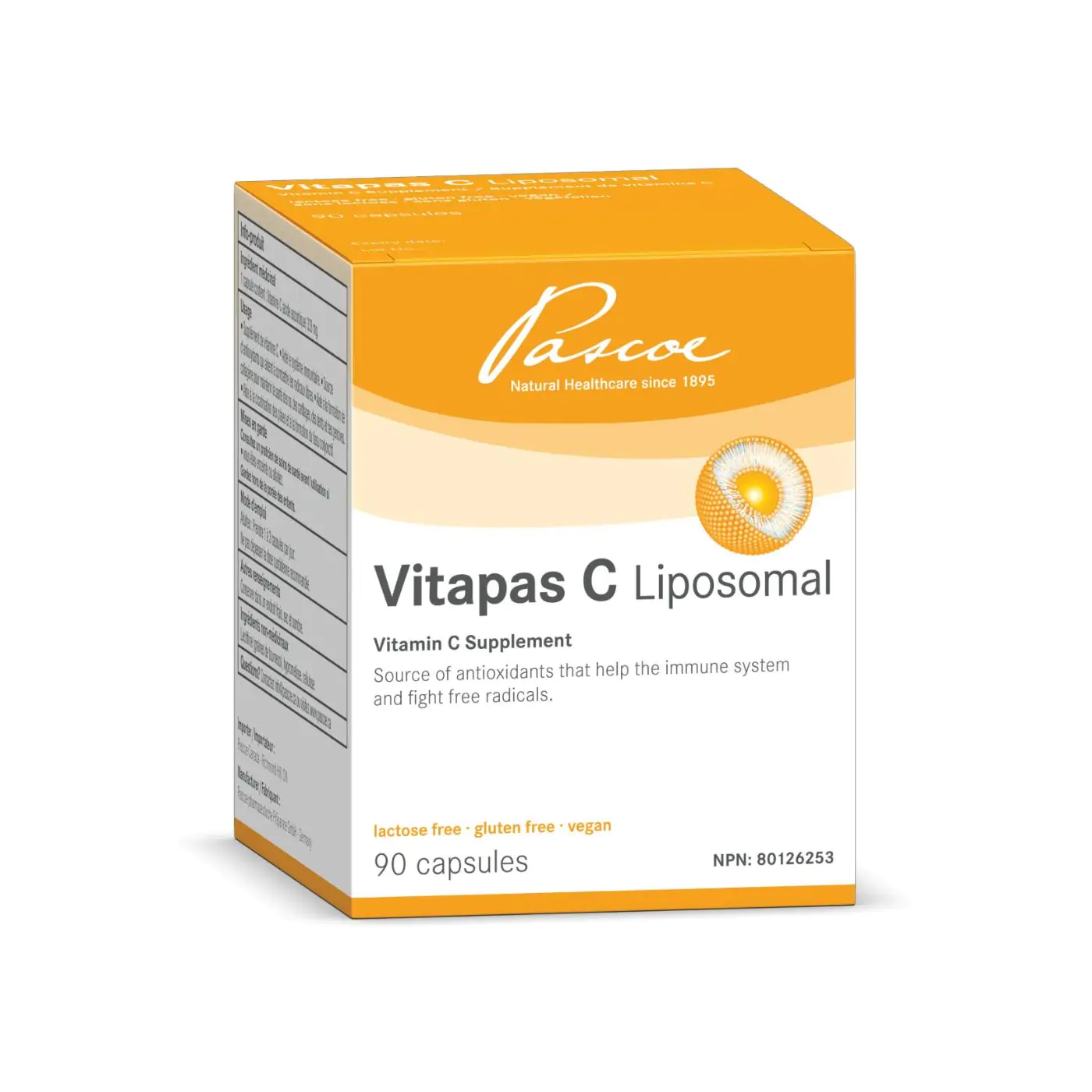
 Vitapas C Liposomal


Source of antioxidants that help the immune system and fight free radicals.
$31.95